
The Vapor Recovery Process
Learn how vapor recovery units (VRUs) capture and reuse valuable hydrocarbons, reducing emissions and boosting profitability in oil and gas operations.
Let’s start with the regulatory side of things. If you’re in the oil and gas industry, you know that emissions regulations are tightening and they can feel suffocating to a company. Governments around the world are mandating lower emissions, and failing to comply with these standards can lead to hefty fines, operational restrictions, and damaged reputations. Vapor recovery systems offer a solution to this problem by capturing harmful gases like volatile organic compounds (VOCs) and methane, which would otherwise escape into the atmosphere.
Without vapor recovery, companies run the risk of falling out of compliance with local, state, or even international regulations. And it’s not just about avoiding fines; having a reliable vapor recovery system in place shows that your company is committed to environmental responsibility, something that can strengthen your relationships with customers, regulators, and the public. In a world where corporate social responsibility is more important than ever, vapor recovery is a step toward being a more sustainable, forward-thinking business.
Beyond just the regulations aspect, there lies the underlying implications of environmental impact. When oil and gas companies release VOCs and methane into the atmosphere, it does not just harm the atmosphere and the air we breathe—it contributes significantly to climate change. Methane is a potent greenhouse gas that traps heat in the atmosphere much more effectively than carbon dioxide. If we, as a society, are serious about tackling climate change, then capturing methane emissions in energy production is critical.
Vapor recovery systems help oil and gas companies drastically reduce their carbon footprint by capturing these harmful gases and preventing them from escaping into the environment. That’s not only good for the planet but also for the people living near oil and gas operations. Cleaner air, fewer emissions, and reduced pollution all contribute to a better quality of life for local communities. When companies invest in vapor recovery, they are investing in a cleaner, safer future for everyone.
While we have talked a lot about emissions, vapor recovery is a vital source for increasing revenue for oil and gas producers. The gases that are captured by vapor recovery systems, like methane and propane, are not just waste; they’re valuable resources. By capturing and repurposing these gases, companies can create additional revenue streams. Taking emissions practices from a cost center to a profit center. Whether the recovered gases are reused in production or sold, vapor recovery turns what would have been lost into something profitable.
And it’s not just about selling gases. Vapor recovery also improves operational efficiency by reducing waste and preventing product loss. Every bit of vapor that escapes into the atmosphere represents a loss of valuable product. By capturing those vapors, companies are essentially putting a stop to that loss. In a business where efficiency is key to profitability, vapor recovery systems make a significant difference.
Learn more about why vapor recovery is important.
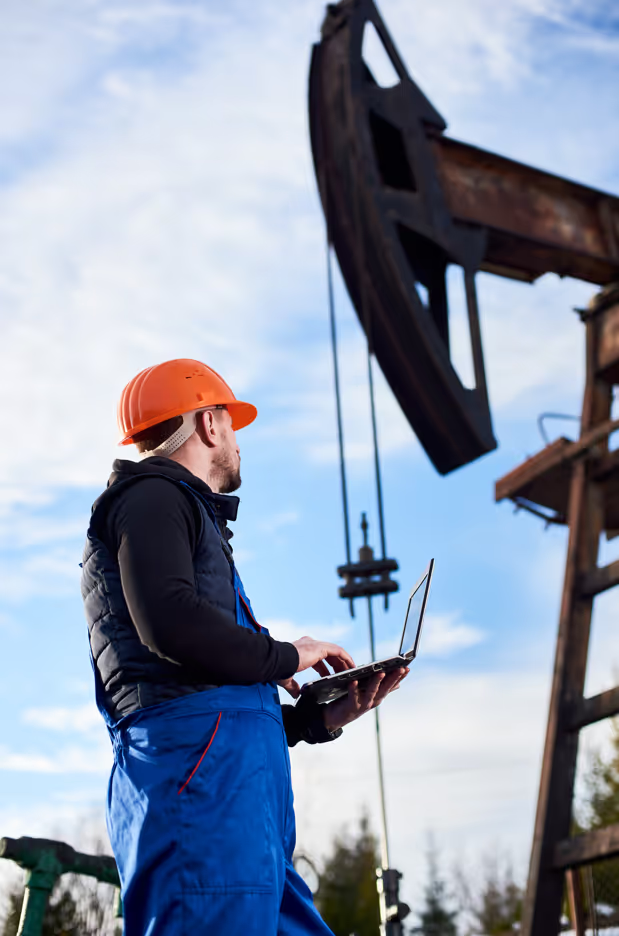
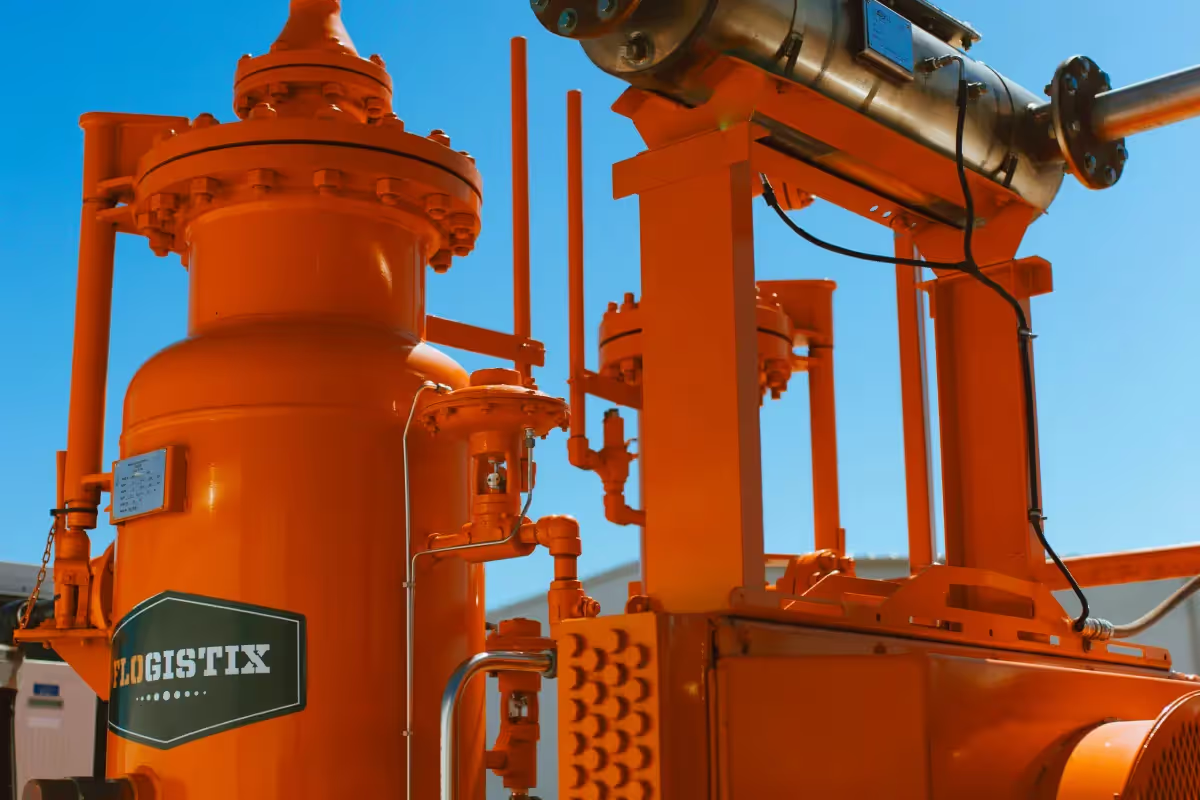

Vapor recovery units (VRUs) are essential in the oil and gas industry for reducing emissions and enhancing efficiency. But what goes into designing these systems? A VRU captures vapors that would otherwise be released into the atmosphere, and injects it into the midstream gathering system. Engineering plays a vital role in ensuring this process is efficient, safe, and compliant with regulations.
A vapor recovery unit (VRU) is a system that captures hydrocarbon vapors, compresses them, and converts them into a usable resource rather than allowing them to escape into the atmosphere. In doing so, VRUs reduce emissions while recovering valuable vapors that can be reused or sold, providing both environmental and economic benefits.
Learn more about the operations of vapor recovery

During the oil and gas production and storage process, hydrocarbon vapors can be released. These vapors accumulate as produced oil experiences pressure and temperature fluctuations. A VRU system is designed to capture these vapors before they escape through venting or flaring.
When the sensors in a VRU detect that the vapor pressure has reached a certain level, the system automatically opens valves that direct the vapor through a series of pipes into the VRU’s compressor. This happens seamlessly and continuously, without the need for human intervention. The goal of this initial step is simple: capture as much vapor as possible before it can be lost to the environment.
The success of total vapor capture is largely reliant on sophisticated automation. By continuously monitoring vapor levels and collecting the flash vapors as necessary, the VRU ensures that operations proceed efficiently with minimal downtime or manual involvement.
Once the vapor is captured, it is compressed to reduce its volume with sufficient pressure to inject it into the pipeline infrastructure. This compression serves two main purposes:
In some cases, the vapor may undergo multiple stages of compression depending on the initial vapor pressure and the specific needs of the operation. Multi-stage compression is especially important in high-pressure applications where controlling the vapor flash from multiple sources is critical.
After the compression stage, the vapor moves into the cooling phase. This is where the separation of the vapors potentially happens. When cooled, hydrocarbons with different boiling points begin to condense. Heavier hydrocarbons like propane and butane condense first and turn into liquid, which can then be separated from the gas stream via a knockout tank before the remaining gas enters the sales line to be sold.
In a VRU, cooling is typically done using a heat exchanger that brings the temperature of the compressed gas down to the required level for custody transfer. Depending on the setup, ambient air run through the cooler by a fan is typically used to cool the vapors, causing the heavier components to condense into liquid form. This liquid is collected in a separator and sent off for further processing or sale.
This cooling and condensation step is critical for separating valuable liquids from gases, allowing companies to make the most out of their captured vapors.
After being cooled, the heavier hydrocarbons have condensed, and the next step is separating the liquid from the gas. The separated liquids—such as propane and butane—are stored and can be sold as fuel or used in other processes. The remaining gases, primarily methane, is injected into the gathering system.
The separation process occurs in a phase separator, which is specifically designed to divide the gas from the liquids efficiently. The liquids are collected for storage, sale, or further processing, while the gas is typically routed for additional use, such as being sold as natural gas or utilized onsite for energy generation.
By ensuring both liquid and gas hydrocarbons are captured and separated, VRUs maximize the amount of usable material recovered, preventing waste and boosting efficiency for the oil and gas producer.
The final step in the vapor recovery process is to deal with the recovered gas, typically methane. Methane is an extremely valuable resource that can be used in several ways, including:
By the end of the process, a VRU has effectively captured, compressed, cooled, and separated both liquid and gas hydrocarbons, turning what could have been waste into valuable resources that contribute to the operation’s profitability and helped minimize emissions.
.avif)
Not all vapor recovery units (VRUs) are the same, and the needs of each operation determine which type of system is most appropriate. Whether managing low-pressure vapor streams in marginal wells or addressing high-volume emissions, there is a vapor recovery solution suited to the application.

With Flogistix you get:
Ready to take the next step in optimizing your vapor recovery process? Contact us today to see how we can help you transform your operations.